What your city or county allows
Rules depend on where the property is. The City of Austin changed its residential rules in 2023 and 2024, allowing more than one home on most single-family lots. Cities such as West Lake Hills and Rollingwood have their own codes, and rural properties may fall under county rules.
Size limits, setbacks, height limits and parking requirements still apply, and homeowners associations may add their own restrictions. Confirm the current rules for your specific lot before paying for design.
Impervious cover and trees
Impervious cover is the share of a lot covered by roofs, paving and other hard surfaces. On many lots it is the real limit on a casita’s size. Protected trees and their root zones can also decide where a new building can go.
A simple site plan showing existing cover and tree locations is the most useful first document.
Utilities: power, water, sewer or septic
- Electrical capacity. A casita with its own kitchen and heat pump may need a service upgrade or a separate meter.
- Sewer connection. The distance and fall to the sewer line affect cost.
- Septic systems. On septic, common in the Hill Country, adding bedrooms usually means reviewing the system’s capacity and may require changes.
- Water. Properties on wells or rainwater need those systems sized for the extra use.
Designing a small building well
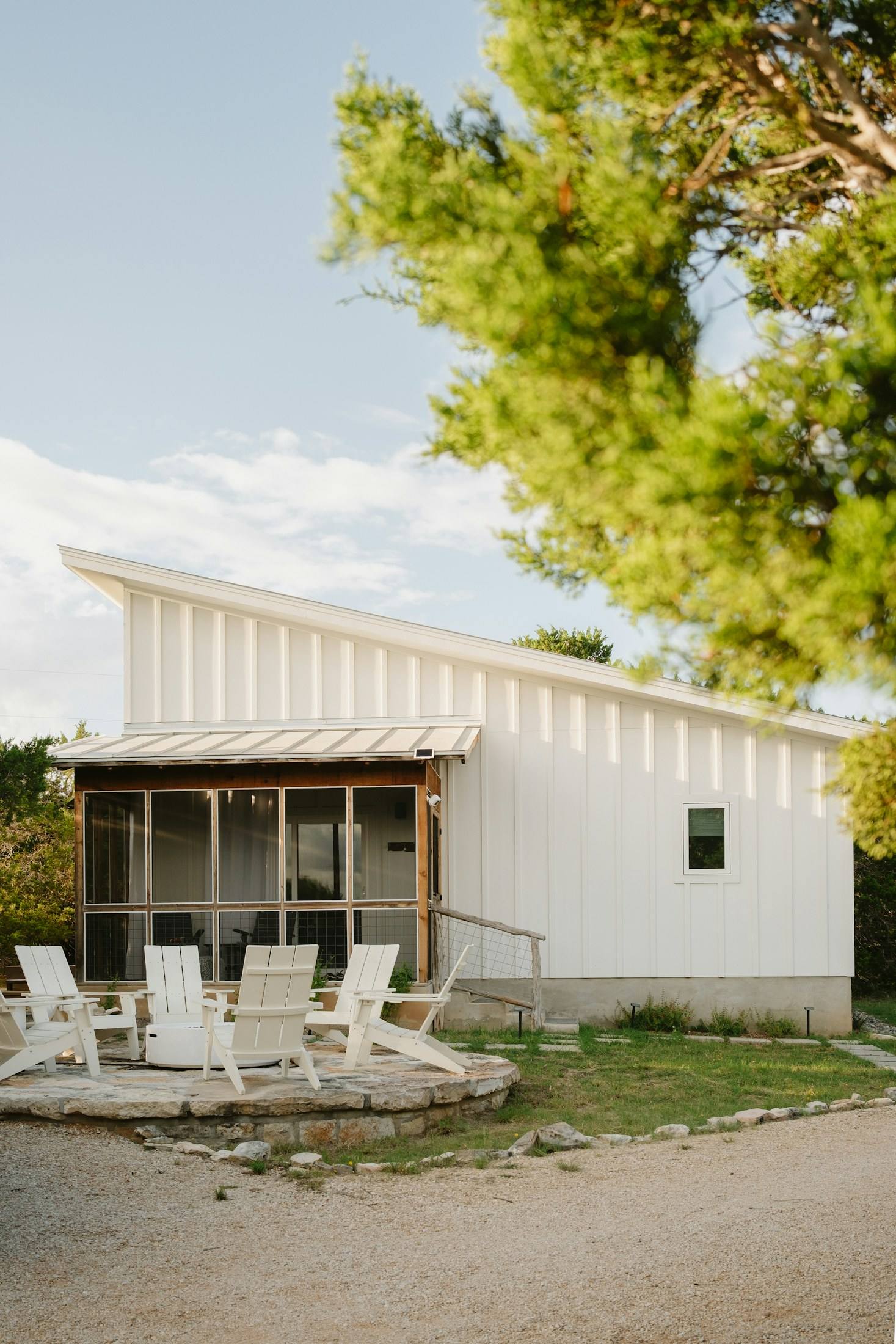
Small buildings reward careful design. Ceiling height, a covered porch, windows on two sides and built-in storage make a few hundred square feet feel generous. Orient the casita for privacy from the main house and shade from the afternoon sun.
Matching the main house’s roof pitch, materials or window proportions makes the two read as a pair, like the two rooms of a dogtrot house.
A sensible order of steps
- Check zoning, HOA rules and impervious cover for your lot.
- Locate trees, easements and utilities on a survey.
- Confirm electrical, water and sewer or septic capacity.
- Then design, price and permit.
Our additions and casitas work starts with exactly this feasibility step.
General information for Central Texas homeowners, written for a fictional company in a demonstration website. It is not legal, engineering or permitting advice; confirm current rules with your city or county.